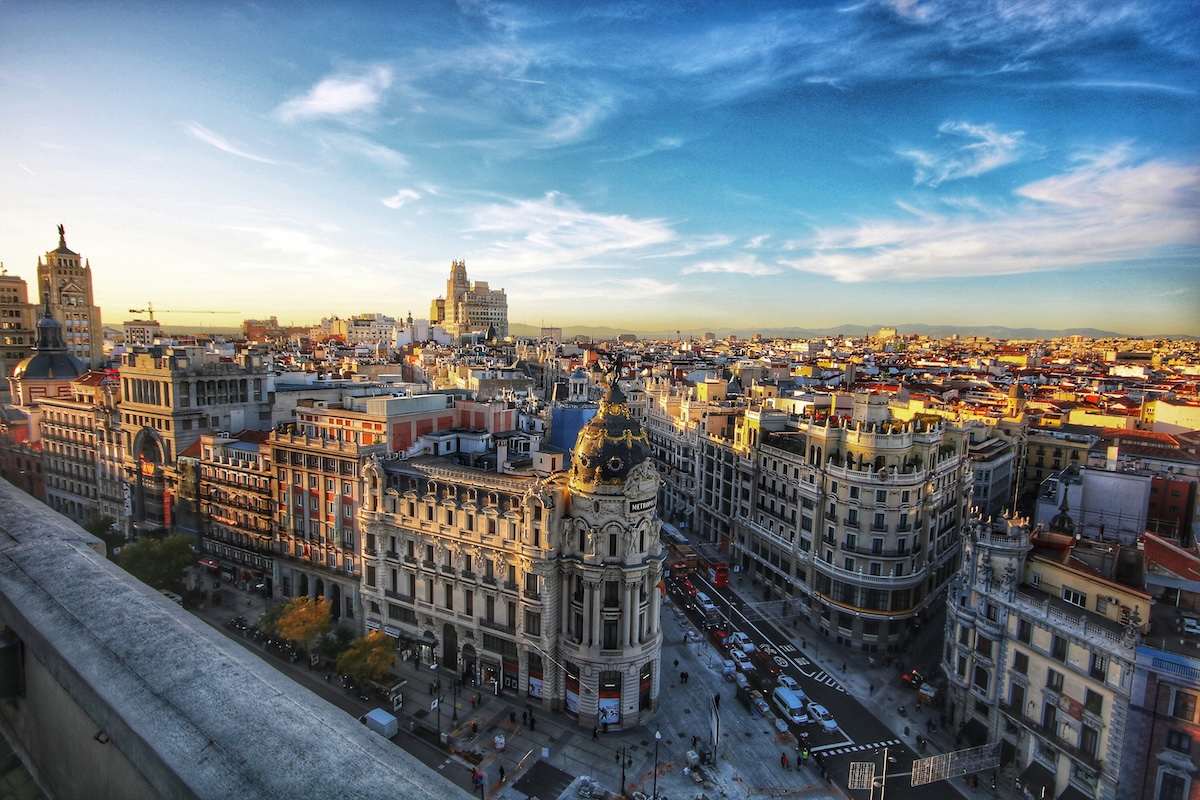
Sol & Gran Vía, Madrid
Sol and Gran Vía are Madrid's most obvious first-time base: central, energetic, walkable, and full of big-city landmarks. This area is touristy for a reason. It puts Puerta del Sol, Plaza Mayor, shopping streets, theaters, and a lot of Madrid's civic life within an easy walk.
Best For
First-time Madrid visits, walkable sightseeing, shopping, theater nights
Main Sights
Puerta del Sol, Gran Vía, Plaza Mayor, Callao, Preciados
Stay Style
Historic hotels, central boutiques, rooftop-friendly city stays
Trade-Off
Very convenient and lively, but crowded and less calm than nearby residential neighborhoods
Things to Do
What to See and Do in Sol & Gran Vía
01
Start at Puerta del Sol for orientation, not for a long stop
Puerta del Sol is the obvious starting point because it sits at the center of Madrid's street network and symbolic life. You get Kilometer Zero, the bear statue, the Casa de Correos clock, and a clear sense of how many major streets converge here.
But it is best treated as a launch point rather than the whole plan. Sol is most useful when it helps you understand the center and then pushes you outward into better streets.
02
Walk Preciados and Carmen to Callao
The pedestrian streets between Sol and Callao are one of the easiest ways to feel the neighborhood's rhythm. Preciados and Carmen are busy, commercial, and a little chaotic, but they make the case for staying in the center if walkability matters to you.
This is also one of the best first walks in the area because it links the square, shopping streets, and Gran Vía without requiring any transport or planning.
03
Use Gran Vía as an architecture walk, not only a shopping strip
Gran Vía works better when you see it as an urban set piece rather than just a retail corridor. The avenue's early-20th-century buildings, broad sweep, and theater energy are a major part of why the area feels distinctively Madrid.
Walk it once in daylight and once later in the evening. The street changes noticeably depending on the hour, and both versions are worth seeing.
Curated Hotels Nearby
Boutique Hotels in Madrid


04
Pause at Callao instead of only passing through
Callao is one of the most useful pause points in the area because it sits where shopping, cinema history, theater energy, and major Gran Vía movement all collide. It can feel hectic, but that is part of its role in the district.
A short deliberate stop here helps the neighborhood feel less like a blur of one big avenue and more like a sequence of distinct nodes.
05
Walk down to Plaza Mayor and the older core
Plaza Mayor gives the area more historical weight and helps connect Sol to Habsburg Madrid. The arcaded square is one of the best places to understand how the monumental and older parts of the center sit together.
It also works well as a slower counterpoint to Gran Vía. If the avenue feels all momentum and noise, Plaza Mayor brings the pace down.
06
Use Plaza Mayor as a gateway to side streets and markets
Plaza Mayor itself matters, but the surrounding lanes are where the district becomes more interesting. This is a good point to move toward the older streets, food stops, and market detours that keep the center from feeling too generic.
If you want one practical rule for this area, it is this: use the famous spaces as anchors, then spend time in the smaller streets around them.
07
Take in one rooftop over Gran Vía
The center of Madrid benefits from a little elevation. A rooftop stop helps you understand the scale of Gran Vía and the density of the surrounding historic core in a way street level cannot.
This does not need to become a whole luxury outing. One well-timed rooftop drink or viewpoint can make the whole neighborhood feel more coherent.
08
Use the theater district for your evening plan
Sol and Gran Vía are at their best when you treat them as a nighttime neighborhood too, not only a daytime sightseeing zone. The theaters, cinemas, lit-up buildings, and late foot traffic make the area feel much more alive after dark than many central historic cores do.
That is one of the strongest arguments for staying here on a short trip. You can finish the day without leaving the neighborhood.
09
Step into one cultural stop off the main flow
This part of Madrid can become too much about movement if every stop is a square, a shopping street, or a terrace. Adding one cultural stop just off the main flow, whether a smaller museum, church, or historic building, helps the district feel richer.
You do not need a full art-museum day for that. Even a shorter stop changes the pace and gives the center more depth.
10
Use the center as a walking base, not a taxi base
One of the best things about Sol and Gran Vía is how easy they make the rest of central Madrid on foot. Many of the city's most useful first-time routes start or end here naturally.
That means the neighborhood works best when you lean into walking. If you use it only as a place to sleep between rides, you lose much of its value.
Stay Nearby
Staying in Sol & Gran Vía: Practical Tips
These notes are about choosing the right base, not the sightseeing route. Use them after you know the area fits your trip style.
Choose a side street over the loudest avenue
A hotel labeled Sol or Gran Vía can feel dramatically different depending on whether it sits directly above the busiest stretches or one street away. Noise, foot traffic, and nightlife spillover matter a lot here.
If sleep is important, prioritize side streets, upper floors, and better soundproofing over the most obvious address. The center is compact enough that a calmer block still keeps you close to everything.
Should you stay in Sol and Gran Vía?
Stay here if this is your first Madrid trip, if you want the easiest sightseeing base, or if theater, shopping, and centrality matter more than neighborhood quiet. It is one of the strongest short-stay bases in the city.
Choose Malasaña or Chueca if you want a more local social rhythm, or La Latina if food streets and older neighborhood character matter more than having the city's biggest arteries outside your door.
Common Questions
Sol & Gran Vía FAQ
Is Sol and Gran Vía a good area to stay in Madrid?
Yes. Sol and Gran Vía are among the best areas for first-time visitors because they are central, highly walkable, and close to major sights like Puerta del Sol, Plaza Mayor, theaters, shopping streets, and much of Madrid's historic core.
What is Sol and Gran Vía known for?
The area is known for Puerta del Sol, Gran Vía's architecture and theaters, Plaza Mayor nearby, major shopping streets like Preciados, rooftop views, and its role as the tourist and cultural heart of central Madrid.
Is Sol better than Malasaña to stay in Madrid?
Sol is better for first-time visitors who want the most central and convenient base. Malasaña is better if you want a more local, nightlife-oriented neighborhood with more character and slightly less tourist intensity.
Deciding where to stay in Madrid?
Compare Sol & Gran Vía with other neighborhoods before choosing your hotel.