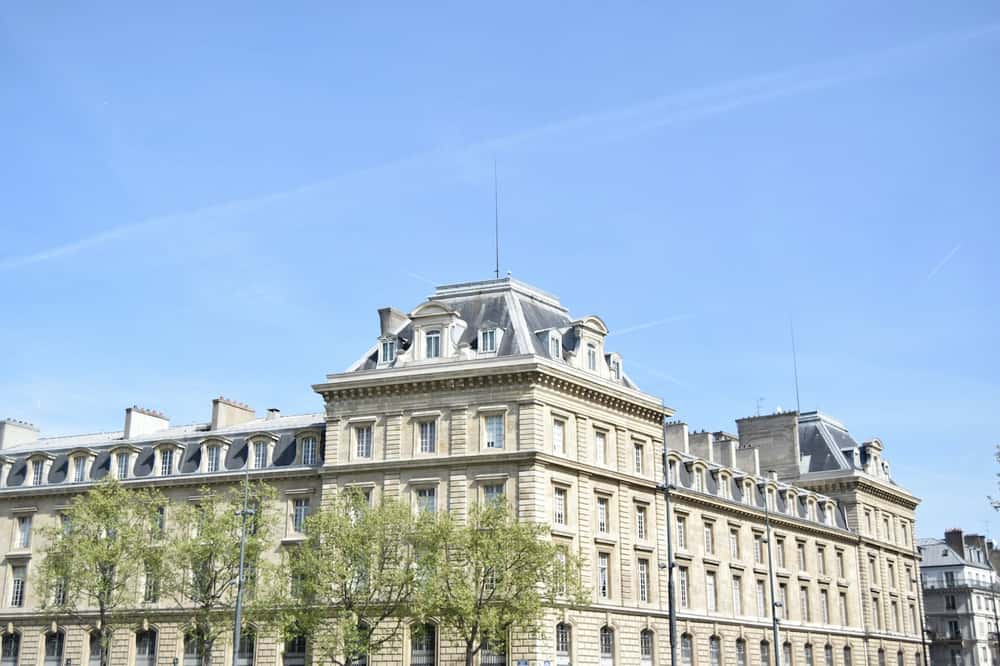
Le Marais, Paris
Le Marais is one of the easiest Paris neighborhoods to enjoy on foot. It combines historic streets, elegant squares, small museums, cafes, boutiques, and a strong boutique-hotel scene within a compact area on the Right Bank.
Best For
Boutiques, cafes, museums, first-time Paris stays
Main Sights
Place des Vosges, Musee Picasso, Rue des Rosiers, Carnavalet
Stay Style
Townhouse hotels, design-led rooms, walkable side streets
Trade-Off
Excellent atmosphere, but weekends and shopping streets get busy
Things to Do
What to See and Do in Le Marais
01
Start at Place des Vosges
Place des Vosges is the classic starting point for Le Marais. The square is calm, symmetrical, and easy to enjoy slowly: walk the arcades, pause in the garden, then use it as a gentle entry into the surrounding streets.
If you are staying nearby, come early or near dusk. The square is much quieter outside peak daytime hours, and it gives the neighborhood a more residential feel than the busier shopping lanes.
02
Browse Rue des Francs-Bourgeois
Rue des Francs-Bourgeois is one of the main shopping streets in Le Marais, with fashion boutiques, galleries, and historic facades packed into a short stretch. It is useful for orientation, but it is also one of the busier parts of the area.
Use it as a spine, then step into the smaller side streets. That is where Le Marais feels less like a shopping route and more like a neighborhood: courtyards, small cafes, bakeries, and quiet corners appear quickly once you leave the main flow.
03
Visit the Picasso Museum or Carnavalet
Le Marais has several worthwhile museums, but the neighborhood works best when you choose one focused stop instead of overloading the day. Musee Picasso and the Carnavalet Museum are the two easiest anchors for most visitors.
Pair one museum with a long cafe break or a slow walk toward the Seine. The appeal of Le Marais is not just the checklist sights; it is the rhythm of moving between culture, shopping, food, and quiet streets.
Curated Hotels Nearby
Boutique Hotels in Paris


04
Explore Rue des Rosiers
Rue des Rosiers is the historic heart of the Jewish quarter and one of the most visited food streets in Le Marais. It is atmospheric, but it can also feel crowded at lunch and on weekends.
Go earlier in the day if you want a calmer look at the street, or treat it as a quick stop rather than the whole plan. The surrounding lanes often feel more relaxed and still keep you close to the same neighborhood character.
05
Walk down to the Seine
One advantage of staying in Le Marais is that the Seine, Ile Saint-Louis, and Notre-Dame area are within easy walking distance. This makes the neighborhood practical as well as atmospheric.
A good late-afternoon route is to walk south through the smaller streets, cross toward Ile Saint-Louis, then loop back for dinner or drinks in the Marais. It gives the day a wider Paris feel without needing the Metro.
06
Follow a Place des Vosges-to-Seine loop
A simple route starts at Place des Vosges, moves through the side streets toward Rue des Francs-Bourgeois, pauses around the museum streets, then drifts south toward the Seine. It gives you the neighborhood's best mix without turning the day into a checklist.
If you are staying in Le Marais, split the loop across two moments: early morning for quiet streets and late afternoon for shopping, cafes, and a more social atmosphere.
07
Go gallery-hopping in Haut-Marais
Weekends, holidays, and late afternoons bring the heaviest crowds, especially on shopping streets and around Rue des Rosiers. The area can still be enjoyable, but it feels more like a destination than a neighborhood.
For a calmer stay, look for hotels on smaller streets away from the main shopping flow. You can still reach everything quickly, but the immediate mood around the hotel will feel more relaxed.
08
Eat at Marché des Enfants Rouges
Marché des Enfants Rouges is one of the best food stops in the upper Marais. It is compact, informal, and useful when you want a lunch break that feels more neighborhood-based than restaurant-reservation heavy.
Go before peak lunch if you want more choice and less pressure. The market works especially well on a day that also includes Rue de Bretagne, Haut-Marais shops, and a slower walk back toward Place des Vosges.
09
Step through Hôtel de Sully
Hôtel de Sully is a useful architectural pause near Place des Vosges. Its courtyard and passage help connect the square with the surrounding Marais streets, and it gives the neighborhood's mansion history a clearer shape.
This is a short stop, but a good one: add it before or after Place des Vosges rather than making a separate trip. It helps the Marais feel less like a shopping district and more like an old aristocratic quarter.
10
Browse Rue Vieille du Temple
Rue Vieille du Temple is one of the easiest streets for combining galleries, boutiques, cafes, and people-watching. It also helps link lower Marais and Haut-Marais without relying on one crowded shopping street.
Use it as a wandering street rather than a destination. The best Marais days often come from moving between streets like this, stopping when a shop, courtyard, or cafe looks interesting.
Stay Nearby
Staying in Le Marais: Practical Tips
These notes are about choosing the right base, not the sightseeing route. Use them after you know the area fits your trip style.
Choose a hotel near the right Metro edge
Le Marais is walkable, but the best hotel pockets are often defined by nearby Metro edges. Saint-Paul, Hôtel de Ville, Chemin Vert, Arts et Métiers, and République all change the feel of the stay.
For first-time visitors, staying toward Saint-Paul or Hôtel de Ville gives easy access to the Seine and central sights. Staying farther north can feel trendier and better connected to restaurants and nightlife.
Choose the right hotel pocket
Lower Marais near Saint-Paul is best for classic streets, Place des Vosges, and easy Seine walks. Haut-Marais is better for galleries, cafes, fashion, and a slightly more local evening rhythm.
If you want boutique-hotel atmosphere, prioritize side-street townhouse properties over rooms directly on the busiest retail lanes. The neighborhood is compact enough that a quieter pocket rarely costs you much convenience.
Should you stay in Le Marais?
Stay in Le Marais if you want a central, stylish, walkable Paris base with cafes, boutiques, small museums, and easy access to the Seine. It is especially strong for travelers who like doing a lot on foot.
Choose Saint-Germain if you want a more classic Left Bank feel, the Latin Quarter for a livelier academic atmosphere, or Montmartre if village-like streets matter more than central convenience.
Common Questions
Le Marais FAQ
Is Le Marais a good area to stay in Paris?
Yes. Le Marais is central, walkable, atmospheric, and well suited to boutique hotels. It works especially well for travelers who want cafes, shopping, small museums, and easy access to the Seine.
What is Le Marais known for?
Le Marais is known for historic streets, Place des Vosges, boutique shopping, galleries, museums, cafes, and the Jewish quarter around Rue des Rosiers.
Is Le Marais too touristy?
Parts of Le Marais are busy, especially Rue des Francs-Bourgeois and Rue des Rosiers on weekends. Smaller side streets and early mornings feel calmer and more local.
Deciding where to stay in Paris?
Compare Le Marais with other neighborhoods before choosing your hotel.