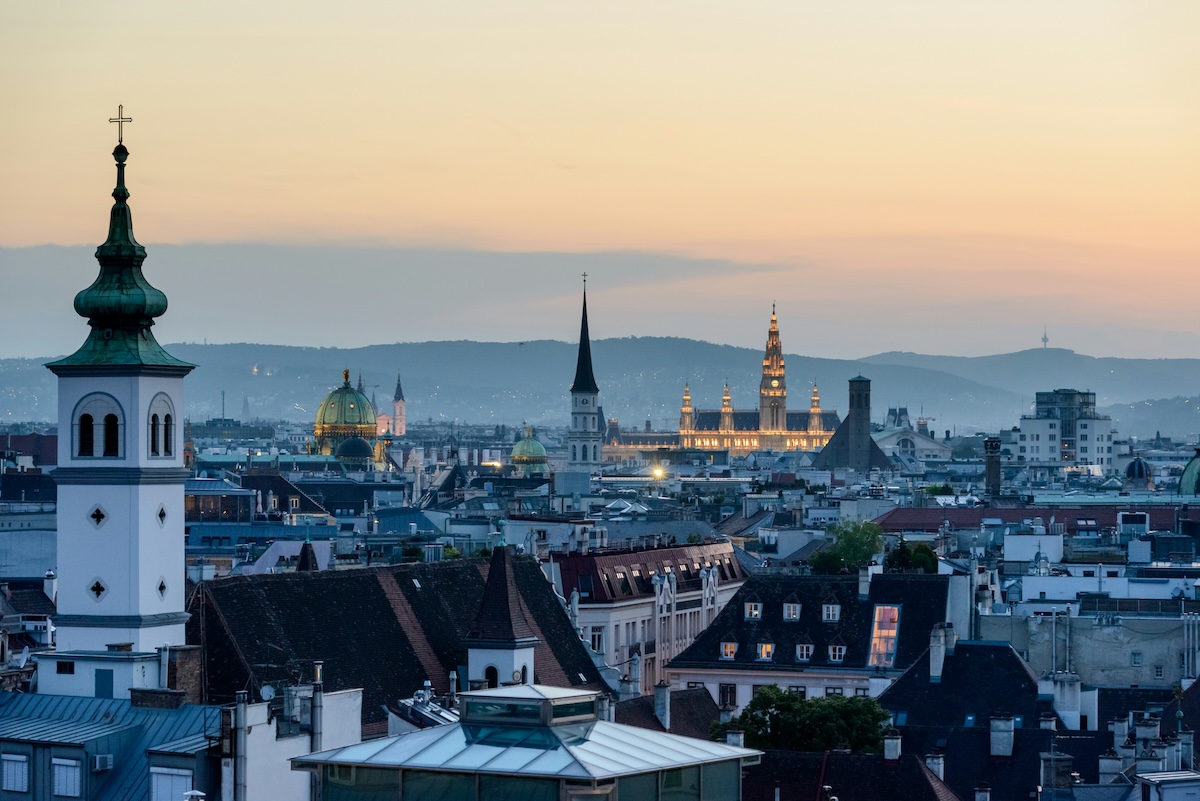
Innere Stadt, Vienna
Innere Stadt is Vienna's historic and ceremonial core, where imperial palaces, church spires, grand shopping streets, museums, and coffeehouses all sit within an easy walking loop. It is one of Europe's most elegant first-time city-center bases and one of the easiest parts of Vienna to enjoy without rushing.
Best For
First-time Vienna visits, imperial sights, walkable classics, coffeehouse days
Main Sights
Stephansplatz, Hofburg, Graben, Albertina, Burggarten
Stay Style
Classic luxury hotels, elegant boutiques, polished old-center stays
Trade-Off
Beautiful and central, but expensive and less local-feeling than outer inner-city districts
Things to Do
What to See and Do in Innere Stadt
01
Start at Stephansplatz for orientation
Stephansplatz is the clearest place to begin because it immediately shows how Vienna's old center works. Streets radiate outward from the cathedral into shopping lanes, quieter alleys, and bigger imperial set pieces, all within a compact walk.
Use it as your anchor rather than your whole plan. Innere Stadt becomes more rewarding once you move through it instead of standing at its busiest node.
02
Go inside St. Stephen's Cathedral
St. Stephen's Cathedral is more than a landmark photo. It is the core symbol of Vienna and one of the fastest ways to feel the age and weight of the old city. Even a relatively short visit changes your sense of the neighborhood.
If you have time and energy, the tower or catacomb options add another layer. But even from the nave alone, it is one of the district's essential stops.
03
Walk Graben and Kohlmarkt as a single imperial shopping line
Graben and Kohlmarkt are best understood as one continuous experience. Together they form Vienna's most polished old-center promenade, lined with facades, luxury storefronts, churches, and the kind of urban elegance the city does unusually well.
This is worth doing even if shopping is not the point of your trip. The streets themselves are part of the attraction.
Curated Hotels Nearby
Boutique Hotels in Vienna


04
Give the Hofburg real time
The Hofburg is one of the main reasons Innere Stadt feels different from other European old towns. It is not a single building but a huge imperial complex that can anchor a large part of the day if you let it.
You do not need to see every museum wing to appreciate it, but you should give the palace and its surrounding spaces enough time to register as more than a backdrop.
05
Pause in Michaelerplatz and Josephsplatz
Michaelerplatz and Josephsplatz are some of the best places to slow down within the Hofburg area. They give the imperial core more breathing room and make the neighborhood feel composed rather than simply grand.
This is also where Innere Stadt often looks and feels most classically Viennese: formal facades, carriages, museum entries, and architectural symmetry all close together.
06
Use the Albertina as your main museum stop
The Albertina is one of the easiest heavyweight cultural stops to fold into Innere Stadt because it sits right on the edge of the historic core and links naturally with both the Hofburg and the Opera side. It gives the district artistic depth without requiring a separate museum-quarter day.
Unless modern art is the full focus of your trip, one strong museum stop here usually works better than trying to overpack the day with collections.
07
Sit for a proper coffeehouse break
Vienna's center works better when you stop treating it like a marching route and give it one proper coffeehouse pause. Innere Stadt is built for this rhythm: walk, look, sit, then continue.
That is part of the city's identity, not an optional extra. A coffeehouse break is one of the things that keeps the center from feeling too monumental.
08
Use Burggarten as a green reset
Burggarten is one of the simplest ways to interrupt the stone-and-facade density of the old center. The lawns, imperial backdrop, and open space help the district breathe, especially on warmer days.
It is a short stop, but a smart one. Innere Stadt benefits from moments like this where the pace drops without losing the setting.
09
Walk Kärntner Straße toward the Opera side
Kärntner Straße connects the cathedral side to the Opera and Albertina edge in a way that makes the entire old center feel cohesive. It is busier than some of the side streets, but it is useful and visually strong enough to be worth an intentional walk.
Use it to stitch together the district rather than rushing straight through. In a neighborhood like this, the connectors matter almost as much as the monuments.
10
Save one evening walk for the lit-up old center
Innere Stadt is worth seeing again after dark, when the facades, squares, and church fronts are lit and the daytime crowds ease slightly. The district can feel more elegant and less task-oriented in the evening.
That is one of the biggest advantages of staying here. You get access to the center at its calmest without planning a separate excursion.
Stay Nearby
Staying in Innere Stadt: Practical Tips
These notes are about choosing the right base, not the sightseeing route. Use them after you know the area fits your trip style.
Choose a quieter lane, not just the most famous address
A hotel in Innere Stadt can feel very different depending on whether it sits on a major shopping street, a ceremonial square, or a smaller side lane. The district is compact, so a slightly quieter address rarely costs you much convenience.
When booking, favor soundproofing and side-street calm over the most obvious location. In such a small center, the trade is often worth it.
Should you stay in Innere Stadt?
Stay here if this is your first Vienna trip, if imperial architecture and classic sightseeing matter most, or if you want the easiest, most elegant central base. It is one of the city's strongest short-stay neighborhoods.
Choose Neubau or Mariahilf if you want a more contemporary local feel, or Leopoldstadt if you want slightly more space and a different pace while staying close to the center.
Common Questions
Innere Stadt FAQ
Is Innere Stadt a good area to stay in Vienna?
Yes. Innere Stadt is one of the best areas for first-time visitors because it is central, highly walkable, and close to major sights like St. Stephen's Cathedral, the Hofburg, the Albertina, Graben, and many of Vienna's classic coffeehouses.
What is Innere Stadt known for?
Innere Stadt is known for Vienna's historic center, especially St. Stephen's Cathedral, the Hofburg, Graben, Kohlmarkt, elegant shopping streets, museums, coffeehouses, and imperial architecture.
Is Innere Stadt better than Neubau to stay in Vienna?
Innere Stadt is better for first-time visitors who want classic landmarks and the most central possible base. Neubau is better if you want a more creative, local, and contemporary neighborhood feel with less of the formal imperial atmosphere.
Deciding where to stay in Vienna?
Compare Innere Stadt with other neighborhoods before choosing your hotel.